The Cost-Effective Edge of 3D Printing for Unit Volumes in the Hundreds of Thousands
Published
January 26, 2026
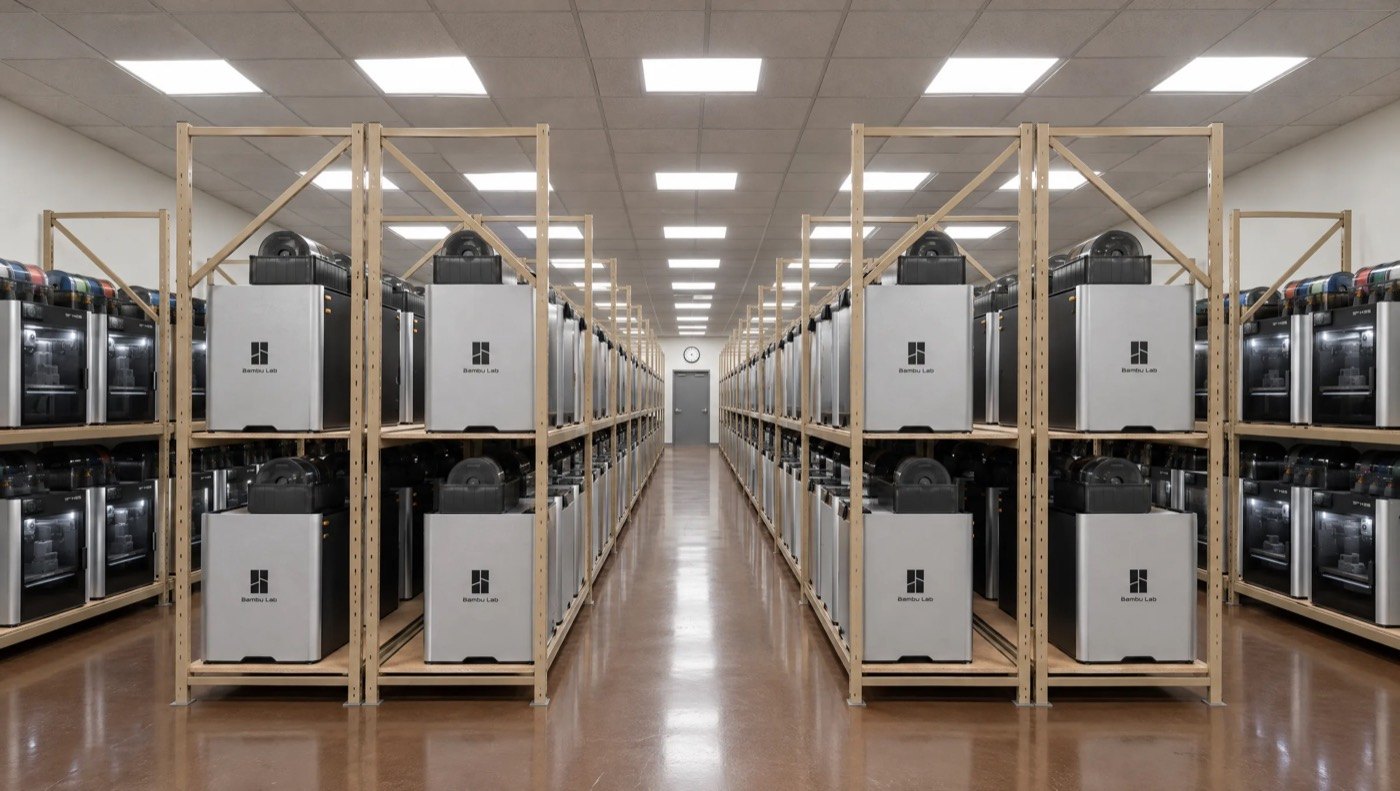
In the world of manufacturing, efficiency and cost-effectiveness are paramount. For many years, injection molding has been the go-to method for mass production. However, with the advent of advanced 3D printing technologies, companies are discovering a new, more economical way to produce parts, especially for unit volumes in the hundreds of thousands.
Why 3D printing is more cost-effective and efficient
- No mold costs. Unlike injection molding, which requires expensive molds, 3D printing does not need molds. This eliminates the significant upfront cost and allows for more flexibility in design changes.
- On-demand production. Parts can be produced as needed. This eliminates the need for bulk production and reduces the associated costs of warehousing and inventory management.
- Reduced inventory and warehousing costs. Without large-scale storage of pre-manufactured parts, companies save on logistics and warehousing. Parts can be produced and shipped directly to the customer or the point of use, streamlining the supply chain.
- Customization. Easily produce customized parts and products tailored to specific needs without added cost. This is especially valuable for industries that need bespoke solutions or frequent design updates.
- Speed to market. 3D printing significantly reduces the time from design to production, so companies can bring products to market faster.
- Sustainability. Less material waste and the ability to use recycled materials make for a more sustainable manufacturing process.
- Ease of part modification. You can modify a part's design at no additional cost, which gives companies an unparalleled advantage when iterating and innovating.
Exploring 3D printing technologies for mass production
Different 3D printing technologies offer different benefits and suit different applications, depending on part requirements and industry needs. Printerior's 3D printing experts can guide you through the options and recommend the right method and material for your application.
Fused Deposition Modeling (FDM)
Use cases: durable, functional prototypes and end-use parts, common in automotive, aerospace, and consumer goods.
- Affordable material costs.
- Versatile material options, including ABS, PLA, and engineering-grade thermoplastics.
- Suitable for large parts.
Selective Laser Sintering (SLS)
Use cases: complex geometries and functional parts without support structures, widely used in medical devices, aerospace, and tooling.
- High strength and durability.
- Excellent mechanical properties.
- Capable of producing intricate and complex designs.
Stereolithography (SLA)
Use cases: precise parts with a smooth surface finish that need to be produced in high volumes, often small medical and engineering-grade parts.
- Exceptional surface quality and detail resolution.
- A wide range of resins for different properties.
- Suitable for detailed and intricate parts.
Additional post-processing methods
- Polishing and smoothing for a smooth, glossy finish on SLS or FDM parts. Vapor smoothing or polishing can deliver injection-molding-grade finishes.
- Painting and coating for improved aesthetics and additional protection.
- Annealing to enhance the mechanical properties of FDM or SLS parts.
For unit volumes in the hundreds of thousands, 3D printing is a cost-effective, flexible alternative to injection molding. By leveraging FDM, SLS, and SLA, with the right post-processing, companies can achieve high-quality parts with lower costs and faster production times. At Printerior, we're committed to helping our clients realize the full potential of 3D printing, driving innovation and efficiency in manufacturing.
Explore the future of cost-effective, versatile manufacturing with us, and discover how 3D printing can transform your production.