Revolutionizing Manufacturing: The Rise of Sustainable Mass Production 3D Printing
Published
March 13, 2024
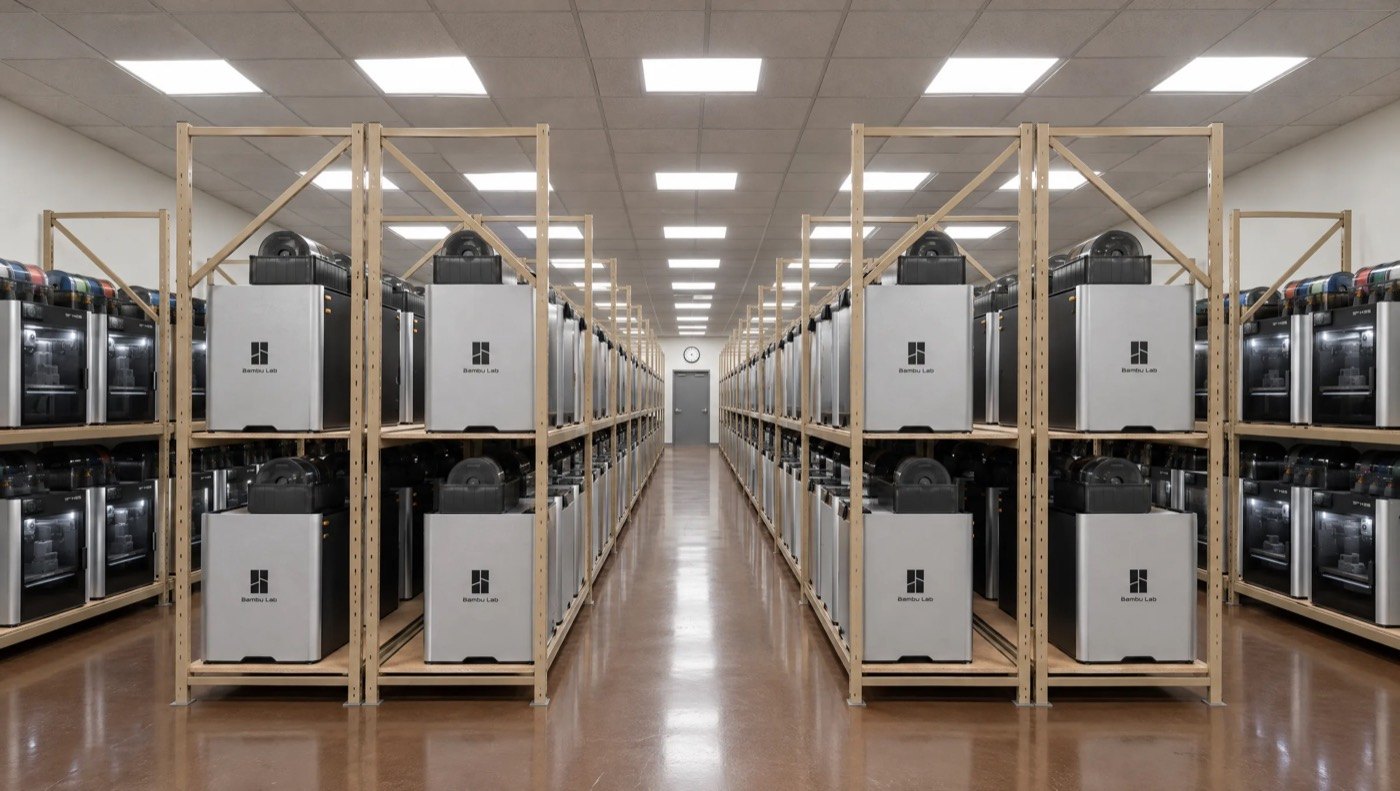
In the ever-evolving landscape of manufacturing, sustainability and efficiency have emerged as pivotal factors driving innovation. As businesses strive to minimize their environmental footprint while maximizing productivity, one technology stands out: 3D printing. Traditionally viewed as a tool for prototyping and customization, 3D printing is now poised to revolutionize mass production with sustainable practices at its core.
Sustainable mass production through 3D printing represents a paradigm shift. Unlike traditional methods that often generate excessive waste and rely heavily on fossil fuels, 3D printing offers a more eco-friendly alternative. Here's how.
Reduction in material waste
Traditional manufacturing often uses subtractive methods, carving raw material away to create the product and wasting a significant share of it. 3D printing is additive, building objects layer by layer. Only the material the part needs is used, which minimizes environmental impact and lowers production costs.
Energy efficiency
Conventional manufacturing typically requires substantial energy, from heavy machinery to heating and cooling industrial facilities. Additive manufacturing directs energy to the precise deposition of material rather than across an entire production line, so businesses can significantly lower their energy consumption and carbon emissions.
On-demand manufacturing
Traditional methods rely on large production runs to reach economies of scale, which leads to overproduction and excess inventory. With 3D printing, businesses produce items as needed, with no large warehouses and far less risk of surplus stock becoming obsolete. This lean approach minimizes waste and offers greater flexibility as market demand changes.
Customization and personalization
3D printing lets businesses customize products to individual preferences, such as sizes, colors and designs, without significant added cost. It enhances the customer experience and streamlines production by eliminating specialized tooling and molds.
Scalability and cost-effectiveness
3D printing has long been associated with prototyping and low volumes, but advances in high-speed, high-resolution printers and materials science now make it viable for large-scale production at competitive costs. With optimized workflows, sustainable mass production through 3D printing is a cost-effective alternative to traditional manufacturing.
The convergence of sustainability, efficiency, and innovation has propelled 3D printing to the forefront of modern manufacturing. By embracing sustainable mass production through additive manufacturing, businesses can reduce their environmental footprint and unlock new opportunities for customization, scalability, and cost-effectiveness, shaping a world where sustainability and profitability go hand in hand.